
Seminar programme 2025-26
Seminar 1: Write to Read: Motivating and Engaging Learners
14:00-15:00 (GMT) Tuesday 25 November 2025
Seminar 1: Write to Read: Motivating and Engaging Learners

This seminar shares insights from the Write to Read research project, a longitudinal collaborative literacy intervention operational in primary schools in Ireland, many of whom are located in marginalised communities and have a substantial number of children who are underachieving in literacy.
The project seeks to support schools to infuse literacy instruction with purpose and passion to simultaneously engage children as readers, writers, thinkers and creators and to improve outcomes.
Examples of classroom practice for 4–12-year-olds drawn from the project will be shared including children’s writing, literature discussions and participant voice. The critical factors- influencing success, both classroom and school will be explored.
Prof. Eithne Kennedy works in the School of Language, Literacy and Early Childhood Education, DCU Institute of Education, Ireland and leads the DCU Centre for Literacy Research, Policy and Practice. She chairs the Master of Education in Literacy Professional Practice programme. Eithne is a former primary classroom teacher with 14 years’ experience (K-12th Grade) in Ireland and the US.
As director of the Write to Read research initiative, she collaborates with schools designated as disadvantaged to create powerful literacy environments that motivate and engage children as readers, writers and thinkers. She has authored and co-authored a range of related publications, most recently: Teaching and Assessing Writing in the Primary School: A Whole School Approach (Routledge, 2025)
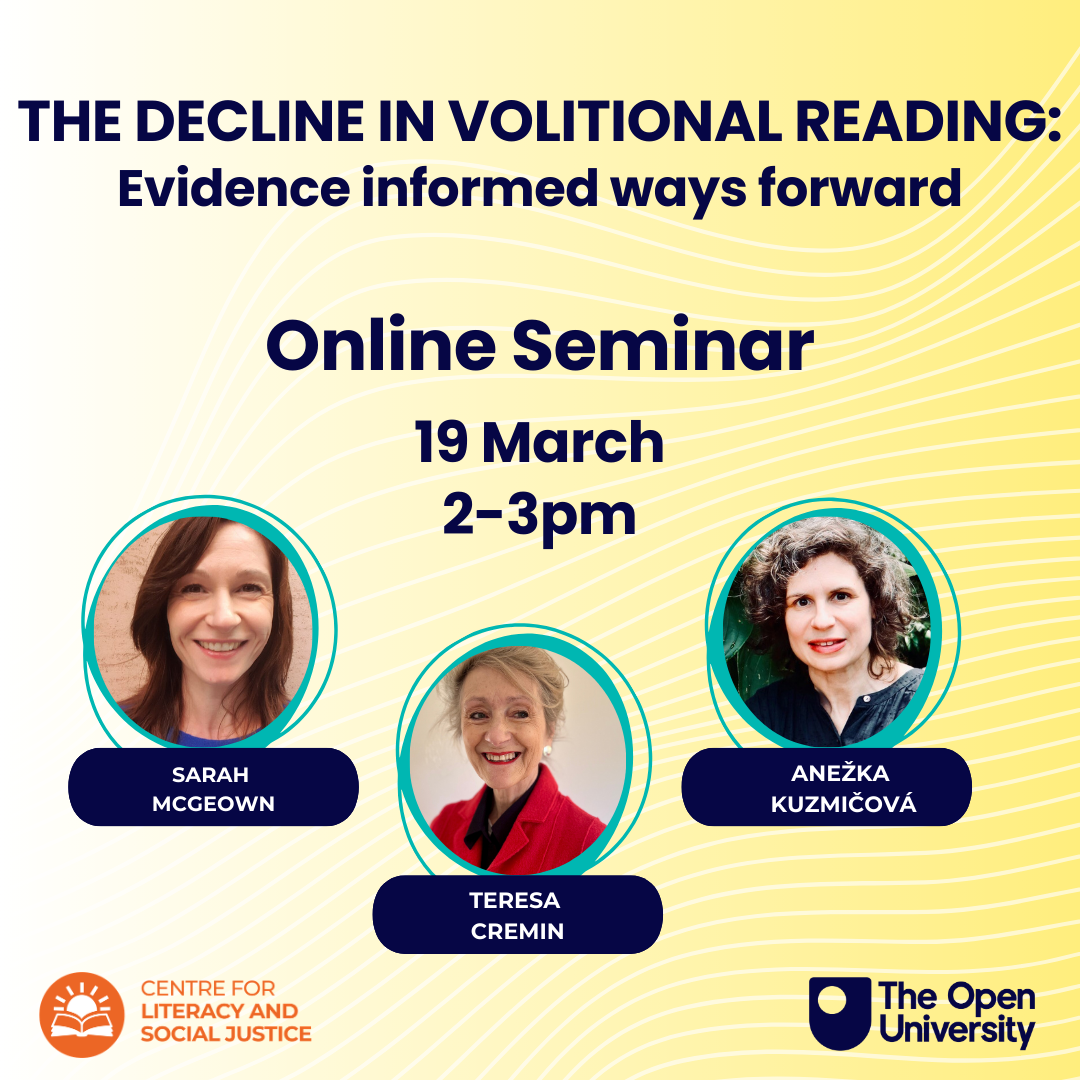
Seminar 2: Decline in Volitional Reading: Evidence informed ways forward
14:00-15:00 (GMT) Thursday 19 March 26
In the light of the benefits associated with volitional reading, the global decline in young people’s attitudes to reading is prompting urgent policy and practice responses. In this seminar, having briefly examined this context, we will consider prevailing myths about reading for pleasure that constrain effective action and propose principles and enabling, culturally responsive pedagogies that offer ways forward.


Explore

Undergraduate
Postgraduate
Policy
-
Follow us on Social media
-


