

Series fiction, romantasy, the classics? What are teenagers reading today?
What are teenagers really reading in 2025 and how often are they doing it? As concerns grow about declining reading for pleasure in adolescence, the DoRA research team at The Open University is digging into young people’s actual habits and choices. Drawing on live survey data from hundreds of UK students, this blog reveals emerging trends in YA reading — from the unstoppable pull of book series to the rise of romantasy — and why knowing what excites young readers matters for schools, libraries and literacy practitioners.
This blogpost takes a sneak peek into some findings from The Open University research project ‘Exploring discourses of representation in Young Adult fiction (DoRA)’. Running until January 2026, we report from the live DoRA survey (372 responses at the time of writing) which uncovers what secondary school students across the UK are reading in 2025.
Despite the growing range and appeal of Young Adult (YA) titles, the number of adolescents who report reading for pleasure is dwindling. We know that reading is not always ‘cool’ and that it competes with other demands on their time including school work (Webber et al., 2024; Wilkinson et al., 2020). While educators working in secondary schools may be open to addressing these concerns, motivating reading for pleasure is not straightforward, but we also know that knowledge about texts and children/young people as readers is central to the OURfP research (e.g. Cremin et al., 2014; 2022; 2024; Hendry et al., 2025). It follows that secondary educators need to understand what young people are motivated to read so they can align with reading trends, leading to our question: what do students report reading in 2025?
Our survey findings[1] show that 18% of students responding report never reading, and 36% report reading ‘rarely’ or ‘monthly’, while 46% read ‘weekly’ or ‘daily[2]’.
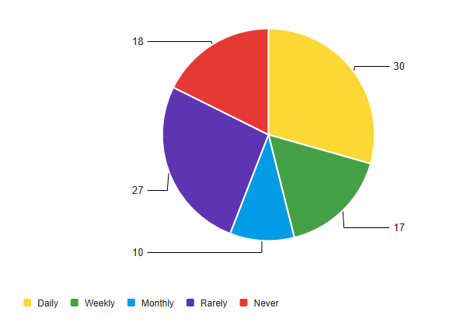
Figure 1 How often do you read?
(as %s for student respondents only – figures don’t add up to 100 due to rounding)
[1] Survey results on 18 August 2025, show 271 student respondents with 80% (n=77) in Years 7-9 and 20% (n=19) in Years 10-13.
[2] We did not ask students to differentiate between their school directed reading and their volitional/ free time reading.
It is possible that students considering themselves as readers and interested in reading may have been more motivated to access the questionnaire. However, given that students also reported reading ‘never’ or ‘rarely’, it does suggest that the questionnaire had wider appeal than purely avid and frequent readers.
What are students reading?
Irrespective of how often they read, 53.5% (n=53) of students who answered the question reported reading a book at the moment. What stands out from these young voices are their preferred genres and the enduring power of the book series. A total of 26 titles were from the overlapping and complementary genres of fantasy, magical realism and romantasy, and 30 titles were part of a series, including the Twilight Series by Stephanie Meyer; The Empyrean Series by Rebecca Yarros; and Rick Riordan’s The Kane Chronicles. Abandoning the real world and ‘what is’ and stepping inside ‘what can never be’ appears to be of resounding interest across age groups.
Respondents reported asking librarians, teachers and search libraries (see green in Figure 2) for book recommendations. Understanding reading trends in 2025 can help motivate young readers with new titles, authors, book series and importantly equip educators with what’s exciting new and current.
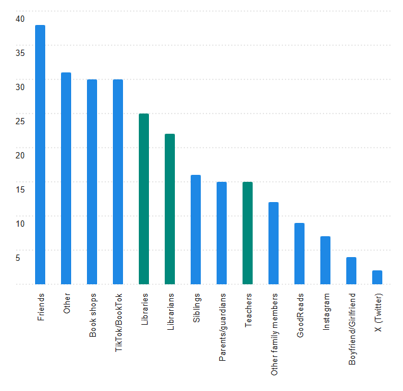
Figure 2: How do you choose which Young Adult books to read?
These insights may help secondary school librarians to consider their collections in the new academic year, addressing concerns about the lack of young people’s voices in collections for young readers (Aggleton, 2018).
For secondary educators wishing to further understand young people’s reading, we suggest you get to know Bella and Edward (Stephanie Meyer, Twilight); find out more about The Tributes (Suzanne Collins, The Hunger Games); ask yourself, why is Greg Heffley so wimpy? (Jeff Kinney Diary of a Wimpy Kid) and understand the flat planet balanced on the elephants on the turtle (Terry Pratchett, Discworld) among the many popular series written for teenage readers.
If you’d like to support our project, please do any or all of the following:
Participate in and share our questionnaire using this link: Exploring Young Adult Fiction: DoRA
Look at our website for more information about our research – Exploring Discourses of Representation in Young Adult Fiction
Join our mailing list – email [email protected]
References
Aggleton, J. (2018) Where are the children in children’s collections? An exploration of ethical principles and practical concerns surrounding children’s participation in collection development, New Review of Children’s Literature and Librarianship, 24:1, 1-17, DOI: 10.1080/13614541.2018.1429122
Cremin, T., Mottram, M., Powell, S., Collins, R., & Safford, K. (2014). Building communities of engaged readers: Reading for pleasure. Oxford: Routledge.
Cremin, T., Hendry, H., Rodriguez Leon, L., & Kucirkova, N. (Eds.). (2022). Reading Teachers: nurturing reading for pleasure. Oxford: Routledge


Explore

Undergraduate
Postgraduate
Policy
-
Follow us on Social media
-


