
Traversing a vast terrain including local and regional democracy, ageing, care, reproduction, sexuality, disabilities, and migration, we co-create the spaces and tools communities need to re-frame narratives, claim and defend rights, and forge powerful solidarities.
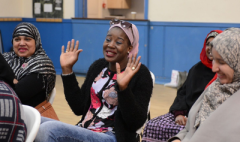
How can migrant support organizations use participatory and artsbased methods to support migrants' civic engagement? The project collaborated with migrant support organizations to train migrants in using these methods for participation, producing a toolkit and a short film.
OpenLearn course co-produced with carers and endorsed by the Carers Trust.
This project was to co-produce a tool to support autistic people with profound learning disabilities to have a bigger say in the day-services they are part of.
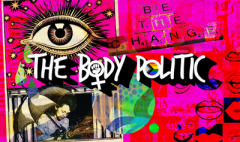
The Body Politic is an intersectional feminist learning space that attempts to capture the rich tapestry of experiences, perspectives, skills and knowledges developed through feminist activism around abortion in Ireland. Our aim is to share these precious knowledges across time and space so that they can be applied to wider struggles
Wales’ media faces a crisis: funding cuts, the closure of news services, and threats to public service broadcasting are signs of a democracy with a diminishing public square. To generate solutions, IWA and the OU in Wales commissioned a Citizens’ Panel of fifteen people to discuss these issues and come up with recommendations for solutions.
Experience for Justice is a group of academics who have personal experience of criminal justice interventions. We support each other in developing ideas and actions to change the criminal justice system for the better by recognising the value of our various experiences
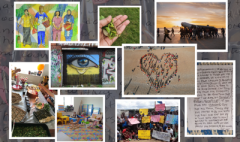
This is a participatory project co-created by a group of researchers with direct experience of forced migration and/or have worked and lived with refugees, asylum seekers and undocumented people. In chronicling experiences COVID-19, we aimed at challenging the UK’s “hostile environment” for migrants by building solidarities, promoting a better understanding of the problems being faced, campaigning for the recognition of rights and social justice, and facilitating self-representation, civic engagement and community participation.
Co-authored by OU academics and prisoners and ex-prisoners, this is the first authoritative volume to look back on the last 50 years of The Open University providing higher education to those in prison, this unique book gives voice to ex-prisoners whose lives have been transformed by the education they received. Offering vivid personal testimonies, reflective vignettes and academic analysis of prison life and education in prison.
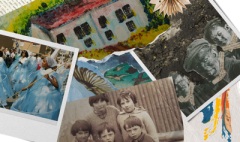
Wales REACH engages disadvantaged or peripheralised people with the heritage that
matters to them. The project uses creative techniques to enable participants to learn about, and reflect on their cultural and
natural heritage and produce creative materials to showcase their heritage.
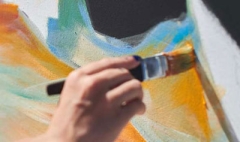
ALPHABETICA seeks to provide effective solutions that allow children and young people from disadvantaged communities access to arts and arts-based education through co-creative participatory research actions.
NEW ABC carried out nine innovative actions co-created together with children, youth and other stakeholders in nine EU countries aimed at enhancing the inclusion of migrant and refugee children and young people in education.
Using participatory and creative research methods with separated migrant children and adult stakeholders, Children Caring on the Move (CCoM) investigates separated child migrants’ experiences of care, and caring for others, as they navigate the complexities of the immigration-welfare nexus in England.
A digital space devoted to migrant self-representation and to migration research projects that use arts-based methods to explore experiences of migration.
The Amar, bari, amar jibon (ABAJ) was a co-produced study exploring the housing needs, experiences, and aspirations of 76 older Bangladeshi adults aged 50 years and over across four East London boroughs. Community co-researchers and community (Bangla) and professional research advisory groups participated from the outset to make research relevant, accessible, culturally appropriate, and transferable to wider practice and policy.
This Scots language and culture MOOC has been co-created by The Open University in Scotland and Education Scotland with communities across Scotland.
Project in partnership with Unit Nine, a youth music development programme, which works with young people in challenging circumstances to evaluate their work, grow as a company, raise their profile and win more contracts and grants to support young people.
The project aims to develop effective public health approaches to violence prevention, and work with a range of stakeholders at a local, regional and national level to advance these approaches in policy and practice.
Co-produced with Carers in Northamptonshire and iCAN (Integrated Care across Northamptonshire), a set of community assets working with patients with dementia, heart failure and diabetes and their carers.
Working in partnership with Campaign for Learning and University of Bedfordshire and funded by Hallmark Foundation, this is a pilot to develop an intergenerational toolkit on Healthy Ageing; a co-produced learning resource to empower families towards healthy lifestyles across the lifespan.
This research project addresses the UK social science community's need to better understand how participatory action research approaches engage marginalised groups in research as co-producers of knowledge. It combines walking methods and participatory theatre to create a space for exploring, sharing and documenting processes of belonging and place-making crucial to understanding and enacting citizenship.
Project to develop training workshops for health care professionals working in abortion care, as well as nursing and midwifery students.
Reproductive Bodylore is an interdisciplinary study which straddles folklore and health. The project explored the role of vernacular knowledge in contraceptive decision-making through participatory research with volunteer researchers. The OU team worked in partnership with Public Health England and The Folklore Society.
Co-creation and co-research with community workers, practitioners and marginalised young people in areas of contestation/division in Northern Ireland to foster critical thinkers and peaceful changemakers and support conflict transformation. Projects include co-created educational interventions and the Learning from Why Riot co-research project with community partners.
Contact: Gabi Kent
Partner: Community Foundation for Northern Ireland (Communities in Ardoyne, Cregagh, Belfast, Ballymena, Co Derry/Londonderry and Co Armagh)
This Participatory action research and 'purposeful storytelling' project was with 8 marginalised communities and 80 participants across Northern Ireland. The project aims were to support community groups to conduct local research linked with the ESRC funded PSE UK wide research on poverty (PSE UK Necessities survey and Living Standards Survey) and to assist communities in amplifying their findings through ‘purposeful storytelling’ ( short films) which they could use to lobby policy and decision makers about the issues that concerned them.
Building on previous research, this is an ongoing Knowledge Exchange project exploring self-advocacy for people with learning disabilities.
The project aims to raise awareness and transform understandings of the 1826 weavers uprising and Chatterton massacre. It will connect with community stakeholders to enhance public knowledge and understanding and facilitate a sustainable and lasting legacy through the creation of new learning materials and pedagogical resources that offer a fresh interpretation of the events from the perspective of protestors.
Co-productive research focused on end-of-life care planning with people with learning disabilities.
Contact: Elizabeth Tilley
Partner: British Association of Social Workers (BASW); Oxfordshire Family Support Network; My Life My Choice; Future Directions; Nuffield Department of Primary Care Health Services
An inclusive research project focused on improving support to older people with learning disabilities and their families. Collaboration between The OU, Kingston University and Manchester Metropolitian University.
The 'policing vulnerability' project was a localised piece of research co-created with sex workers and police, examining and evaluating the role of the specialist 'sex work liaison officer' role in West Yorkshire Police
The increasing digitisation of sex work presents both new opportunities and new hazards for sex workers. This research used participatory/participant-driven action research to understand visual violence as it is uniquely experienced by sex workers, within and outside traditional lenses of “revenge porn” and copyright.
A 2-year long community research project and partnership with communities across the Fens, eastern England, to critically examine the role of infrastructure, connection and local democracy in supporting place-making.
As we grow older, the opportunities to keep growing our creative capabilities and participate in social, cultural and economic life are reduced. Wise Connections is a project that aims to create ways to trigger socio-cultural interactions (‘seeds’) that grow ‘places’ within homes, public or professional spaces where people feel empowered to discover, integrate and develop what they value to do or be.
Empowering Design Practices is a five-year collaborative research project exploring how community-led design can help empower those who look after historic places of worship to create more open, vibrant and sustainable places that respect and enhance their heritage.
Media, Community and the Creative Citizen was a project with three strands (Hyperlocal Publishing, Community-Led Design and Creative Networks) exploring the value of creative citizenship. The project was part of the Connected Communities Programme.
An innovative youth mental health and wellbeing programme that will enhance emotional resilience in children and young people aged between nine and 25 in Northern Ireland and the border counties of Ireland.
'Scaling up co-design research and practice' is a research project that aims to unleash and build upon the intrinsic capacities of communities, community organizations and academic institutions in order to scale up their co-design practices and ultimately extend their reach and impact.
'Valuing Community-Led Design' is a research project that aims to collate, articulate and disseminate evidence about the value of community-led design and bring the relevant stakeholders together to share good practice and form a research agenda for the future.
nQuire is a community and citizen science platform you can use to design your own research or take part in research studies designed by others.
The Creative Interactions Research Group explores the powerful intersections between academic research and creative practice. As a group, we explore the ways in which engagement with creative practice can enhance academic research, and vice versa; we seek to open up new avenues and opportunities for what it means to do ‘academic research’ and what ‘research outputs’ should look like; and we advocate for making collaboration with creative practitioners more accessible and easier in practical terms within existing structures for funding and administrating research.
Mythic Storytelling and the Changing Environment seeks to explore what intervention a theatrical production and series of workshops based in storytelling from a range of mythic traditions can make in ongoing discussions around the climate crisis.
This project developed a multi-stakeholder workshop which co-developed a potentially radical SRH agenda for Scotland.
Asset based community development (ABCD) is a powerful approach used with a diverse network of communities and community organizations across the UK Connected Communities programme to help uncover and utilize their hidden potential, their tangible resources (such as spaces, services and infrastructures) and intangible qualities (such as creative talents, skills, knowledge, social and emotional capital).
A project exploring civic leadership and how different actors can be brought together to co-design ideas, innovations and actions that push boundaries and address challenges at a local and global level.
Co-produced online training programme for REAct, a community-based human rights monitoring and response programme which documents and responds to human rights-related barriers that individuals experience in accessing services at community level.
Urban trees can act as a cooling strategy in extreme heat events. However, residents’ groups and civil society organisations argue that top-down planning approaches ignore residents’ experiences and entrench inequalities. This project works with communities and urban planning practitioners in Glasgow (Scotland) and Taipei (Taiwan) to collaboratively make sense of the social and cultural landscape to which environmental science-driven approaches to urban nature need to respond.
Originally co-created with UK Police and African migrant partners, this "Evidence Café" Open Educational Resource is a valuable tool for educational knowledge exchange.
This research explores co-creative approaches with young people to develop sexuality education materials in Aruba, the Caribbean. It studys ways of knowing following an anticolonial approach to dominant forms of sexual reproductive health and rights (SRHR) knowledge within the international development sector. The research considers how creative dialogic spaces influence knowledge production, whilst reflecting on concepts of participation, power and affect.