

Co-INSPIRE
Co-Creating Inclusive Spaces in Research and Education
Co-creating education
Co-creating education
Co-productive, co-creative and participatory approaches underpin the OU’s global pre-eminence in the field of educational research.
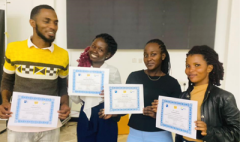
Developing contextually-sensitive Comprehensive Sexuality Education (CSE) for out-of-school adolescents in refugee settings
Contact: Rebecca Jones
Partner: Spice FM Hoima, Reproductive Health Uganda
Qualitative research designed, carried out and analysed by young refugees (peer researchers), alongside staff from Ugandan NGOs and the Open University. Research investigated knowledge, resources and access to SRHR among young refugees in Uganda, to improve the long-term design and delivery of sexuality education.
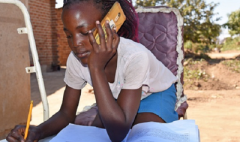
Supporting Adolescent Girls’ Education (SAGE)
Contact: Liz Chamberlain
Partner: Plan, Ministry of Primary and Secondary Education (Zimbabwe)
Accelerated learning programme enabling over 13,000 out-of-school adolescent girls and women to acquire foundational skills in literacy, numeracy and English and to transition back into education, or onto training and/or employment. SAGE materials were co-designed and co-created with partners in Zimbabwe, including Plan and the Ministry of Primary and Secondary Education.

Decolonising Peace Education in Africa (DEPA)
Contact: Parvati Raghuram
Partners: For a list of collaborators, partners and stakeholders, see project link
Using Arts and Humanities methodologies, this project explores different knowledges and values that underpin peace in Africa and considers how these practices be connected and compared across countries to decolonise African peace education.

Zambian Education School-based Training (ZEST)
Contact: Kris Stutchbury and Lore Gallastegi
Partner: World Vision Zambia
Zambian Education School-based Training (ZEST) is a teacher development programme in Zambia. Co-creation of learning resources with teachers and teacher education staff.

Professional Development for Inclusive Education MOOCs
Contact: Kris Stutchbury
Partner: Commonwealth of Learning's Teacher Futures Programme
Professional Development for Inclusive Education is a collaboration between the Commonwealth of Learning's Teacher Futures programme and the OU's TESSA programme delivering two courses that focus on what it means to be an inclusive teacher and how you can embed this in the school environment.

TESSA - Teacher Education in Sub-Saharan Africa
Contact: Kris Stutchbury
Partner: A network of 20 Universities
TESSA’s bank of Open Educational Resources (OER) was developed by a consortium of 9 universities, including the OU. Available in multiple language and country versions, they are linked to national curricula and are designed to enhance the quality and demand of local, school-based teacher education. The OER are relevant to teachers and those supporting teachers in colleges, universities and local education offices. Published under an open Creative Commons licence, the modular resources are free to use and adapt.
TESS-India
Contact: Freda Wolfden
Partner: British Council, Save the Children
Created collaboratively with over 200 Indian and international teacher education experts, the toolkit enables teachers to turn teaching policy into practice. Toolkit resources can be adapted according to the priorities of states, districts, schools or individuals. Completed by over 50,000 participants, teacher educators are also supported by a free Massive Open Online Course available in English and Hindi.

English in Action
Contact: Tom Power
Partner: Cambridge Education, BBC Media Action, Underprivileged Children’s Educational Programs (UCEP), Friends in Village Development Bangladesh (FIVDB)
In Bangladesh, English skills are in short supply, limiting economic growth and opportunities. Delivered by a consortium led by Mott MacDonald - Cambridge Education, English in Action, known by many users as the “silence breaking programme”, enabled millions of people across Bangladesh to improve their English as a route out of poverty and into work.
Ibali: Storytelling New Discourses of Educational Inclusion/Exclusion in the UK, Nigeria and South Africa
Contact: Alison Buckler
Partner: TransformativeStory
Funded by the Arts and Humanities Research Council, this project uses storytelling to explore perspectives and experiences of educational inclusion and exclusion with young people and teachers in Nigeria, South Africa and the UK.
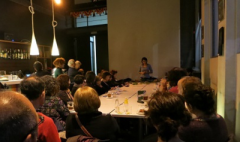
Evidence Cafés for Migration
Contact: Anne Adams
Partner: UK Police and African Migrant Communities
Originally co-created with UK Police and African migrant partners, this "Evidence Café" Open Educational Resource is a valuable tool for educational knowledge exchange.


Explore

Undergraduate
Postgraduate
Policy
-
Follow us on Social media
-


