

Co-INSPIRE
Co-Creating Inclusive Spaces in Research and Education
Co-creation in global development
Co-Creation in global development
Co-production and co-creation are defining aspects of the OU’s work in global development.

Urban trees as a nature-based solution for heat-resilient green neighbourhoods
Contact: Leslie Mabon
Partner: Communities and urban planning practitioners in Glasgow (Scotland) and Taipei (Taiwan).
Urban trees can act as a cooling strategy in extreme heat events. However, residents’ groups and civil society organisations argue that top-down planning approaches ignore residents’ experiences and entrench inequalities. This project works with communities and urban planning practitioners in Glasgow (Scotland) and Taipei (Taiwan) to collaboratively make sense of the social and cultural landscape to which environmental science-driven approaches to urban nature need to respond.

Zambian Education School-based Training (ZEST)
Contact: Kris Stutchbury and Lore Gallastegi
Partner: World Vision Zambia
Zambian Education School-based Training (ZEST) is a teacher development programme in Zambia. Co-creation of learning resources with teachers and teacher education staff.

Professional Development for Inclusive Education MOOCs
Contact: Kris Stutchbury
Partner: Commonwealth of Learning's Teacher Futures Programme
Professional Development for Inclusive Education is a collaboration between the Commonwealth of Learning's Teacher Futures programme and the OU's TESSA programme delivering two courses that focus on what it means to be an inclusive teacher and how you can embed this in the school environment.

TESSA - Teacher Education in Sub-Saharan Africa
Contact: Kris Stutchbury
Partner: A network of 20 Universities
TESSA’s bank of Open Educational Resources (OER) was developed by a consortium of 9 universities, including the OU. Available in multiple language and country versions, they are linked to national curricula and are designed to enhance the quality and demand of local, school-based teacher education. The OER are relevant to teachers and those supporting teachers in colleges, universities and local education offices. Published under an open Creative Commons licence, the modular resources are free to use and adapt.

Mobile Arts for Peace
Contact: Koula Charitonos
Partner: MAP Network Plus
Mobile Arts for Peace (MAP) is online psychosocial support through the arts in Rwanda. UKRI Newton Fund rapid response project to support young people affected by mental health issues to access psychosocial support.
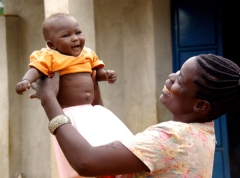
Improving the mental well-being of young mothers in West African countries
Contact: Ayomide Oluseye
Partner: University of Cape Coast
This research aims to improve the mental well-being of young mothers in West African countries. Working with key stakeholders to gather primary data on young women's well-being in Ghana and co-develop, pilot and evaluate an intervention that aims to tackle the stigma associated with young motherhood and promote mental well-being.
TESS-India
Contact: Freda Wolfden
Partner: British Council, Save the Children
Created collaboratively with over 200 Indian and international teacher education experts, the toolkit enables teachers to turn teaching policy into practice. Toolkit resources can be adapted according to the priorities of states, districts, schools or individuals. Completed by over 50,000 participants, teacher educators are also supported by a free Massive Open Online Course available in English and Hindi.

English in Action
Contact: Tom Power
Partner: Cambridge Education, BBC Media Action, Underprivileged Children’s Educational Programs (UCEP), Friends in Village Development Bangladesh (FIVDB)
In Bangladesh, English skills are in short supply, limiting economic growth and opportunities. Delivered by a consortium led by Mott MacDonald - Cambridge Education, English in Action, known by many users as the “silence breaking programme”, enabled millions of people across Bangladesh to improve their English as a route out of poverty and into work.
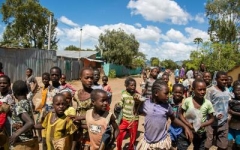
Paediatric HIV Care and Relational Research in KwaZulu-Natal (OSC–CHIVA-Citizens UK Partnership)
Contact: Emil Dauncey
Partner: CHIVA Africa, Citizens UK
This is a long-term, community-embedded research partnership with CHIVA and local health workers in KwaZulu-Natal, South Africa, exploring paediatric HIV caregiving as a relational practice rather than a compliance problem. The project uses co-designed and participatory methods to surface how caregivers and practitioners navigate care, responsibility, and constraint within under-resourced health systems.
Ibali: Storytelling New Discourses of Educational Inclusion/Exclusion in the UK, Nigeria and South Africa
Contact: Alison Buckler
Partner: TransformativeStory
Funded by the Arts and Humanities Research Council, this project uses storytelling to explore perspectives and experiences of educational inclusion and exclusion with young people and teachers in Nigeria, South Africa and the UK.


Explore

Undergraduate
Postgraduate
Policy
-
Follow us on Social media
-


