
.png)
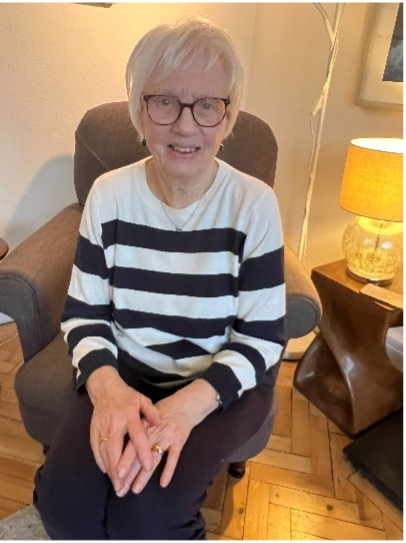
Patricia Stevens, 79, Retired Nurse, Penarth, Wales
What I appreciated most was the structure Take Five provides. When you’re caring for someone else as well as yourself, structure is essential. It helps you keep perspective, manage tasks, and maintain a sense of balance. Take Five reminded me of the importance of small, consistent routines — both for my wellbeing and for supporting my daughter
Why did you sign up for Take Five?
I signed up for Take Five mainly because the title itself caught my attention — Take Five, Age Well. Being 80 this year, it really spoke to me. It felt like the kind of initiative that would be helpful, relevant, and positive for someone at my stage of life.
I also have a long background in health, having worked as a nurse for 60 years, and I’ve always been keen to support anything that promotes wellbeing. So when I heard about Take Five, I felt quite naturally drawn to it. I thought it would be something worthwhile, and I was pleased to take part and contribute.
Did You Continue to Take Part in Take Five?
Yes, I did continue to take part. That’s just my nature — whenever I embark on something, I like to follow it through. I’ve always been a finisher. I felt that if I didn’t give it a fair trial, I wouldn’t really know whether it was successful or meaningful, or whether my involvement was contributing anything useful to the wider community.
A big part of my motivation was thinking about community needs and hoping that whatever I learned, or whatever feedback I could offer, might help others as well. I looked at the literature, looked through it carefully, chose the action I wanted to focus on, and gave it a good go. I felt it was important to commit to it and see what it could really offer.
Which Action did you do and why
I chose walking as my Take Five action because, although I am often busy with everyday tasks like housework and shopping, I do not engage in intentional exercise. With my responsibilities supporting my daughter, I rarely make time for myself, so walking felt like a realistic and beneficial goal.
I live near a rugby and athletics field, which became my route. I started with one lap and gradually built up to six over 40 days. This improved my physical wellbeing and gave me a sense of purpose, helping me get out of the house regularly.
Walking also brought social benefits, as I started recognising people and having small conversations, which reduced feelings of isolation. I learned that six laps equated to about two miles, which felt like a real achievement.
Importantly, I realised the need to pace myself. Pushing too hard made it less enjoyable. Overall, walking became a positive routine supporting both my health and social connection.
Do You Think Take Five Is a Good Idea?
Yes, I do think Take Five is a very good idea. I found that focusing on one action, such as walking, naturally led to other positive changes. For example, I began drinking more water, had more energy, and became more socially engaged through meeting people while walking. It also helped reduce unhealthy habits, such as snacking out of boredom. Over time, I realised that all the Take Five elements are interconnected, with one change leading to others. It even encouraged me to join a yoga group. Overall, Take Five provides a simple, structured approach that highlights how small changes can improve overall wellbeing.
In what ways has Take 5 changed your life, behaviours or attitudes
Take Five has made me much more aware of how different aspects of wellbeing connect. I think I always understood this at some level, but the programme encouraged me to reflect more intentionally on my habits and routines. It helped me see how small, positive changes can improve my overall lifestyle.
When I had to stop due to surgery, I didn’t feel discouraged. Instead, I used what I had learned to approach my recovery more positively. It gave me a sense of structure and purpose, helping me focus on gradual progress. Overall, it has encouraged a more thoughtful and resilient attitude towards my wellbeing.
What have you Learned About Ageing Well, Self Care, Self Management, and Caring for Others
A lot of my learning is influenced by my caring role for my daughter, who is bedbound with severe multiple sclerosis. As a nurse, I already have that background, but Take Five really reinforced many of the principles I used to promote in health education. It brought those ideas back to the forefront after ten years of retirement.
What I appreciated most was the structure Take Five provides. When you’re caring for someone else as well as yourself, structure is essential. It helps you keep perspective, manage tasks, and maintain a sense of balance. Take Five reminded me of the importance of small, consistent routines — both for my wellbeing and for supporting my daughter.
Was It Easy to Stick To? Was It Achievable?
Yes, I found it achievable because I approached it in a structured way. For me, it’s about planning: assessing how you feel, setting a goal, and then evaluating whether you’ve achieved it. That way of thinking is very familiar to me from my professional life, and Take Five fitted naturally into that framework.
Reflecting is also part of it — pausing to think about what’s working, what isn’t, and how you can adjust. That process made it easier to stick to, because it wasn’t overwhelming; it was simply one step at a time.


Explore

Undergraduate
Postgraduate
Policy
-
Follow us on Social media
-


